Your Lake Palestine Dock Isn't Actually Yours. Here's Who Owns It Instead.
September 17, 2026
September 17, 2026
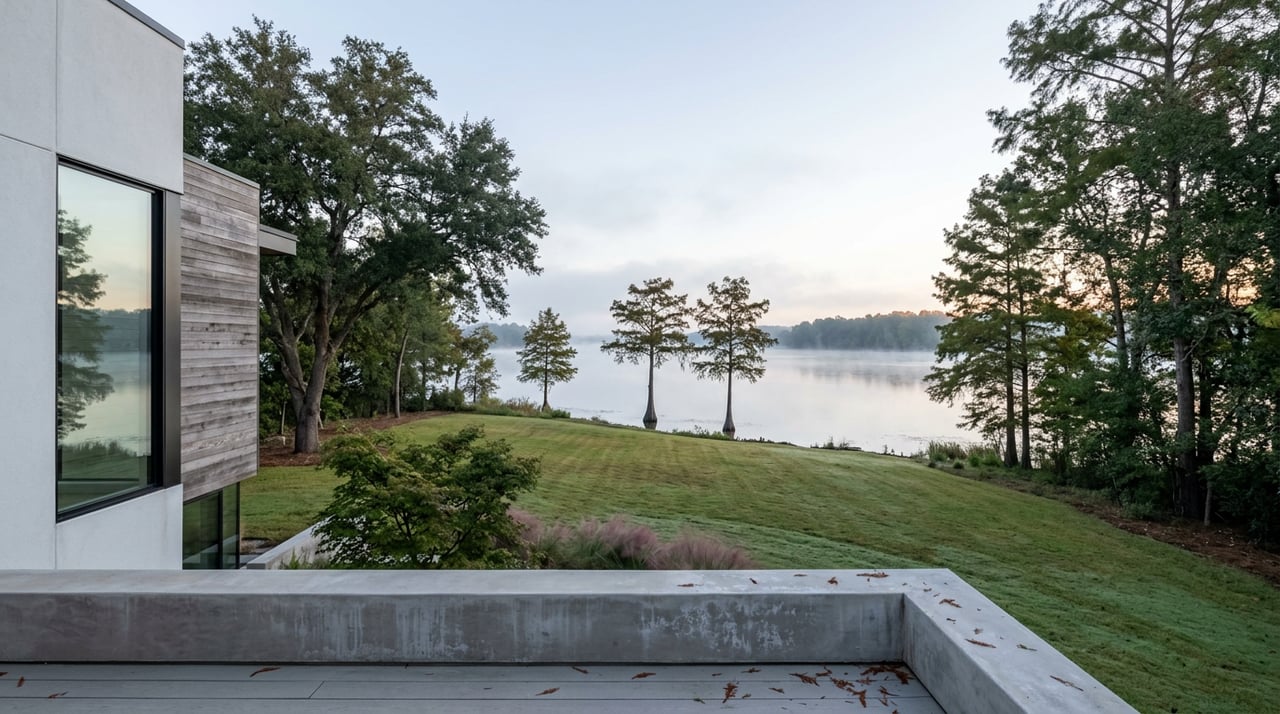
Every waterfront listing on Lake Palestine shows the same hero shot: a boathouse or covered dock jutting into calm water, framed like it's part of the house. Buyers treat it that way too, folding the structure into their mental math right alongside the roof, the garage, and the kitchen. The land under the house belongs to the seller. The dock sitting a few feet away answers to someone else entirely, and title insurance was never built to tell you that.
That someone else is the Upper Neches River Municipal Water Authority, the public entity that owns and operates Lake Palestine and the dam that holds it back. The water, the lakebed, and the shoreline up to a fixed elevation line are the Authority's property, not the homeowner's, regardless of what the deed says about the parcel behind it. For anyone buying or selling waterfront on this particular lake, that distinction is the single most important thing to understand before writing or accepting an offer.
Lake Palestine exists because of Blackburn Crossing Dam, an earthfill structure on the Neches River that was completed in 1962 and enlarged between 1969 and 1971, according to the Texas Water Development Board. The Authority holds the certificate of adjudication for the reservoir and operates it for industrial and municipal water supply first, with recreation layered on top. In 2001, Lake Palestine became the Authority's absolute, debt-free property, a detail that matters because it means there is no bond covenant or outside agency softening how the Authority treats the shoreline. The lake spans Anderson, Henderson, Smith, and Cherokee counties, which means the same dock question can touch four different sets of local building codes depending on which side of the water a property sits on.
None of this shows up in a standard listing description. It shows up the moment a buyer's attorney or lender asks who actually has authority over the structure in the photos.
Under the Authority's own published guidelines for building on the lake, any dock, pier, boathouse, or bulkhead placed over Authority-owned water requires written approval before construction begins. Owning the upland lot next to the water does not grant an automatic right to build or maintain anything over it. Two different permits typically come into play, and they serve different purposes.
| Permit Type | What It Covers | Approximate Cost | Duration |
|---|---|---|---|
| Construction Permit | New builds or substantial repairs to a dock or boathouse | Around $50 per project | Valid roughly 180 days from issue |
| Limited Use Permit | Ongoing use of an existing structure over Authority water | Roughly $25 annually plus $0.05 per foot of shoreline frontage | Renews annually |
A dock built decades ago without either permit is not grandfathered in in any meaningful legal sense. It is simply undocumented, which means the current owner and the next owner both carry the same exposure. Title insurance addresses who owns the land and what liens are recorded against it. It does not address whether the boathouse over the water was ever approved, and it will not step in if the Authority later requires modification or removal.
The permitting reach does not stop at the water's edge. The Authority also serves as the state's delegated agent for on-site sewage permitting within a defined Water Quality Zone along the shoreline, a role assigned to it under Texas Commission on Environmental Quality rules because anything discharged near the takeline eventually reaches the same water the Authority is contracted to deliver. A septic system installed inside that zone, even one installed long before current rules were formalized, can still require a permit on file today. Its absence surfaces the same way an unpermitted dock does, usually during the option period, sometimes at appraisal, and occasionally after closing when there is no clean way to unwind it.
Relocators comparing Lake Palestine against Lake Tyler often assume the two lakes work the same way. They don't. Lake Tyler falls under the City of Tyler's own municipal code, with a city lake manager handling dock approvals. Lake Palestine falls under a river authority with its own separate rulebook, its own fee schedule, and its own enforcement posture. Neither a homeowners association nor the county steps in to manage this on Lake Palestine, which surprises buyers coming from HOA-governed lake communities where the association handles dock rules as a matter of course. The mechanism is different enough that assuming familiarity from one lake to the next is where deals start to slow down.
Sellers benefit from doing this work early too. Gathering permit numbers, renewal correspondence, and a survey showing the structure within its approved footprint before a home ever hits the market prevents the conversation from happening under contract, when a lender's clock is already running.
As of September 6, 2026, Lake Palestine was measured at 92.1 percent full according to the Texas Water Development Board's reservoir tracker. Full, stable water makes it easier to physically inspect a dock or boathouse, check pilings, and get an accurate read on the structure's condition without wrestling with an exposed shoreline. It says nothing about whether a permit exists on file. A full lake and a compliant dock are two separate facts, and buyers who confirm one while assuming the other tend to be the ones renegotiating price a few weeks later.
Does a small, uncovered dock face the same rules as a full boathouse? Both need approval from the Authority before they're placed over the water, though the level of scrutiny scales with what's being built. A simple open pier is the least complicated case. Anything enclosed, roofed, or plumbed draws a closer look.
What if I'm mid-contract and find out the dock was never permitted? The three realistic options are asking the seller to obtain the permit before closing, negotiating a price adjustment or holdback to cover bringing it into compliance, or valuing the property as bare waterfront and planning a rebuild under a new permit once you own it.
Lake Palestine remains one of the most rewarding waterfront markets in East Texas, and none of this changes that. It just means the transaction runs on a different rulebook than most buyers expect, and knowing that rulebook before you're under contract is what keeps a good property from turning into a slow one.
If you're weighing a purchase or a sale on Lake Palestine and want a clear read on what a specific property's permit history actually looks like, Amy Egaña Group works this lake regularly alongside Lake Tyler and the surrounding East Texas communities. Reach out to receive our exclusive listings before they reach the open market.

Architect Brandy Ziegler shares the vision behind Tyler's downtown revitalization, from a new courthouse to the boutique Hotel Blackstone.

Discover unparalleled real estate service with Amy Egaña Group, bringing a fresh and energetic perspective to guide clients seamlessly through buying or selling their homes. Make your real estate journey with the Amy Egaña Group a personalized and rewarding experience.